How Prospectoo Helps You Build a High-Converting B2B Email List
Oct. 30, 2025, 5:54 p.m.
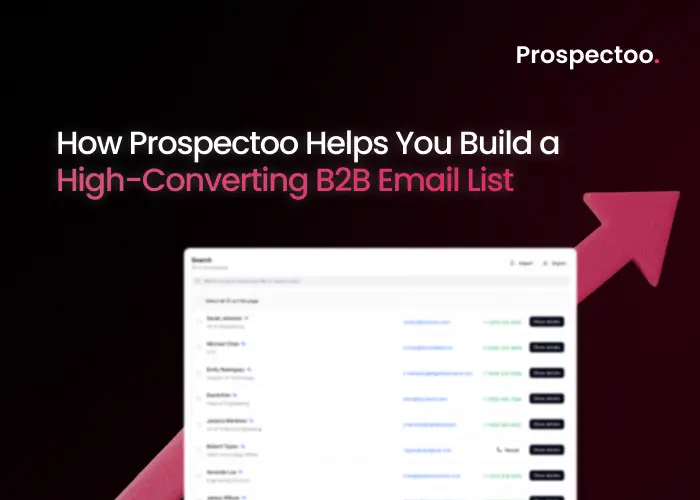
A high-quality B2B database is the foundation of sustainable revenue growth. It enables you to prioritize targeted sales efforts, launch impactful marketing campaigns, and acquire customers efficiently, not merely populating your CRM with data that will soon become obsolete.
Importance of a B2B Database
A B2B contact database provider is much more than a repository of emails and phone numbers. The difference between a stagnant list and a dynamic, up-to-date B2B database can significantly impact business outcomes. According to recent surveys, companies using high-quality B2B email databases are 2–3 times more likely to exceed revenue goals than those relying on generic or outdated data sources.
Step 1: Define Your Ideal Customer Profile (ICP)
Before gathering data, identify the drivers of your business growth. Go beyond basic metrics such as job title or location; analyze industry segments, company sizes, tech stacks, buying triggers, and key decision-maker personas. Use data from recently closed deals to reverse-engineer your best customers.
Action: Analyze your previous year’s sales pipeline and categorize attributes of your top clients to enhance future targeting.
Step 2: Choose Reliable B2B Contact Database Providers
Not all B2B contact database providers are equal. Reputable options such as ZoomInfo, LinkedIn Sales Navigator, Hunter, and Prospectoo offer detailed data enrichment, real-time updates, and seamless CRM integration. When evaluating providers, consider the following:
Data accuracy and frequency of updates
GDPR and data protection compliance
CRM connection (Salesforce, HubSpot, Prospectoo, etc.)
Tools for validating and cleansing B2B email databases
Utilize target keywords when searching for trusted providers, and compare features against your business requirements.
Step 3: Collect, Import, and Structure Your Data
Source contacts from LinkedIn, industry events, gated content, webinars, and website forms. Avoid relying solely on downloaded lists; build your database with segmentation fields like industry, revenue, and purchase intent.
Organize fields for primary contact details and deeper segmentation, including interest categories, lifecycle stages, and decision-making roles.
Step 4: Enrich, Validate, and Automate Updates
Advanced B2B data solutions streamline cleansing by filling gaps, removing duplicates, and flagging outdated contacts. Apply enrichment tools to add missing emails or numbers, validate via third-party sources, and track bounce rates to quickly purge bad records.
Automating these processes is crucial for scaling your B2B email database and ensuring readiness for ongoing sales campaigns.
Step 5: Regular Audits & Optimization
Maintain the quality of your B2B database with regular audits: monthly deduplication, verification of email deliverability, and continuous data enrichment. Set up feedback loops with your sales team to promptly fix inaccuracies.
Protect data integrity by enforcing CRM access controls and restricting who can modify essential contact data. Train sales and marketing teams on best practices for data input and management.
Best Practices for Driving Growth
To keep your B2B data solution aligned with revenue objectives:
Revise Your ICP Quarterly in Response to Market Shifts
An Ideal Customer Profile (ICP) is a dynamic blueprint describing your most valuable customers. Revising your ICP quarterly ensures your sales and marketing efforts stay aligned with current market realities and emerging trends. By analyzing recent customer behavior, deal outcomes, and external factors like industry changes or new competitors, you can refine attributes such as company size, industry focus, technology usage, and buying triggers.
This ongoing refinement helps retain focus on high-potential prospects and avoid wasted efforts on outdated targets. Quarterly reviews also enable the identification of new buyer personas or shifts in customer needs, keeping your ICP relevant and actionable. Data-driven insights from CRM systems, customer feedback, and sales performance metrics are critical to this process.
- Deploy Your Segmented Database Across Multichannel Campaigns
Once your database is clean, enriched, and segmented based on criteria like industry, revenue, purchase intent, and decision-making roles, leverage it across multiple channels to maximize reach and engagement. Using a multichannel approach, email marketing, social media advertising, industry events, and webinars ensures you connect with prospects where they consume information.
Each channel offers unique engagement opportunities: personalized emails nurture leads directly, social campaigns build brand awareness, events provide live interaction, and webinars educate and demonstrate product value. Coordinated campaigns across these touchpoints reinforce messaging, increase lead conversion probability, and improve pipeline velocity. Data segmentation allows personalized messaging and prioritization, tailoring content to each audience segment for better results.
- Continuously Track Leads and Conversion Rates to Optimize Targeting
Tracking lead flow and conversion metrics in real time allows you to measure the effectiveness of your targeting and campaigns. Monitor key performance indicators such as lead volume, lead quality, conversion rates at each funnel stage, and sales velocity. This data reveals which segments respond best, which channels yield higher ROI, and where bottlenecks occur.
With these insights, you can adjust targeting criteria, messaging, and channel allocation to focus resources on high-performing segments. Continuous optimization based on analytics helps improve cost efficiency and drive higher revenue outcomes. Partner feedback loops and CRM-integrated reporting are essential tools enabling rapid adjustments and sustained campaign success.
Conclusion
A carefully built B2B database is the engine of growth, not just a CRM filler. Prioritize ICP definition, choose trusted B2B contact database providers, employ smart data solutions for validation and automation, and continually optimize to fuel real business outcomes, not just collect names.
Fuel Your Growth with Prospectoo’s Precision B2B Database
Unlock the power of a carefully curated B2B database built to drive real business outcomes, not just fill your CRM. Define your ideal customers, choose trusted providers, and automate data validation with Prospectoo.
Get Started Today to transform your sales and marketing with data that delivers results.